|
Locale: The Augusta monitor is located at Viles Arboretum, on the south side of Inner Loop Trail. Starting at the back of the Education Barn, travel approximately 260’ east along the Inner Loop Trail.
Environment/Foliage: Trees in the area include Pine, Fir, Spruce, Ash, Birch, Willow, Maple, Oak, Apple, Cherry, Redbud, Serviceberry, Tupelo, Catalpa, Ginkgo and various other non-native trees. Shrub species also are prevalent and include Dogwood, Viburnum, Winterberry, Chokeberry, Buttonbush, Bayberry, Witchhazel, Lilac. Large expanses of naturalized grassland and wildflower fields surround the entire site.
|
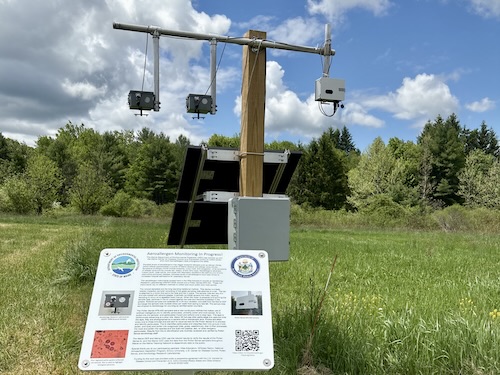 Solar-powered sensor installation at Viles Arboretum in Augusta, with informational placard.
|
|
Locale: The Bangor monitor is near the center of the city, on top of the Mary Snow School roof.
Environment/Foliage: The immediate vicinity has lawn cover and a small marsh. The neighborhood consists of a dense patch of deciduous forest, both residential and urban development, and just 1/10th mi from I-95. Several larger forested parks are within 0.75-1.5mi. Primary tree cover appears to be maple, oak, ash, and elm.
|
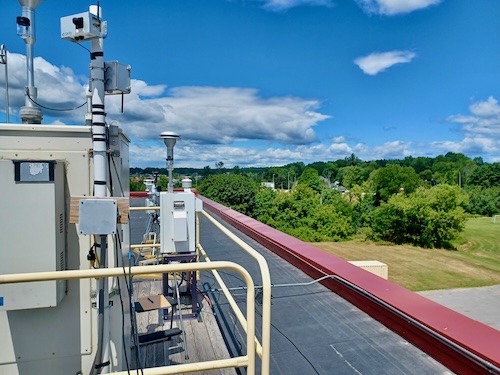 Maine DEP air monitoring installation on roof of Mary Snow School, Bangor.
|
|
Locale: The Cape Elizabeth monitor is located on the roof of the Maine DEP air monitoring station within Two Lights State Park, adjacent to the Battery Commanders Tower. The site lies less than 300 ft from a residential community on Two Lights Road and about ¼ mile from the coastline.
Environment/Foliage: The immediate surroundings include low woody vegetation and shrub cover such as staghorn sumac, meadowsweet, and beach rose. Taller canopy trees in the vicinity are primarily black spruce and white spruce, with a smaller presence of balsam fir.
|
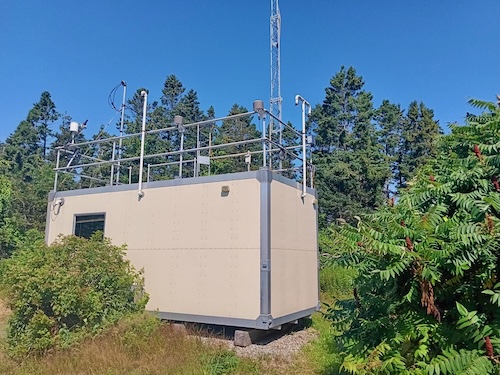 Maine DEP air monitoring station in Cape Elizabeth.
|
|
Locale: Located in the north western section of Presque Isle, south of the Mi'kmaq Environmental Laboratory.
Environment/Foliage: The site is located in a well manicured lawn area. Tree species in the area include Spruce, Fir, Pine, Alder, Ash, Willow, Birch, Maple, Oak, Cherry, Apple, and Serviceberry. Some other non-tree species in the area include Dogwood, Viburnum, Ragweed, Goldenrod, wild asters and other wildflowers and grasses. There is also a small area near the site that includes some raspberry, blackberry, and blueberry bushes.
|
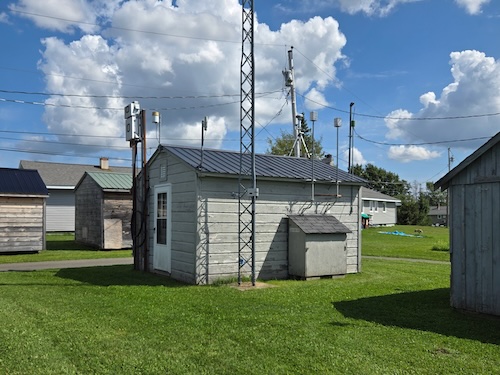 Mi'kmaq Environmental Laboratory air monitoring station in Presque Isle.
|
|
Locale: The Rumford site is located across the river from the paper mill in a contractors parking lot on the edge of town.
Environment/Foliage: There is a forested area between the parking lot and the river which includes a variety of deciduous trees. To the south is a small unmown field with grasses and weeds, edged with shrubs.
|
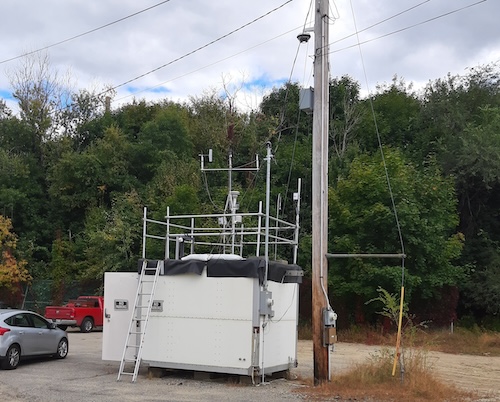 Maine DEP air monitoring station in Rumford.
|


